SIDRA Institute

Policy Briefs

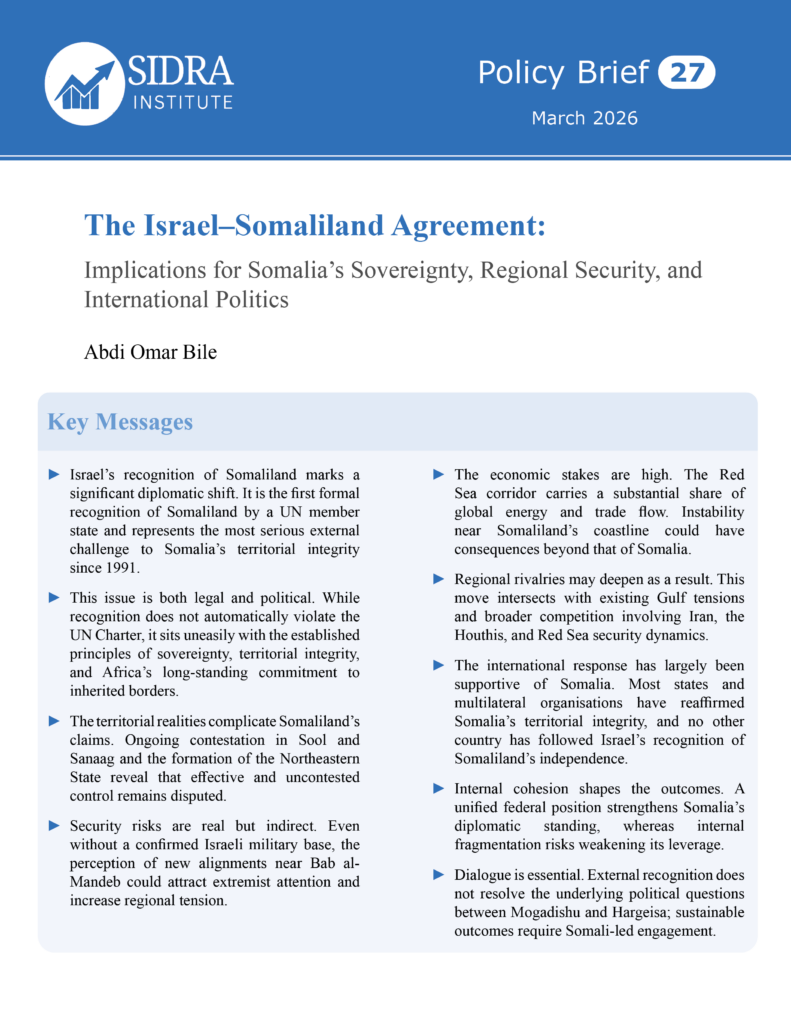
The Israel–Somaliland Agreement: Implications for Somalia’s Sovereignty, Regional Security, and International Politics

The collapse of the military government led by Mohamed Siad Barre in 1991 triggered state breakdown and civil war across Somalia. In the north, the Somali National Movement (SNM) consolidated control over most of the former British Somaliland Protectorate. Following a series of reconciliation conferences involving SNM leaders, clan elders, and community representatives, the SNM Central Committee declared on 18 May 1991 the restoration of the Republic of Somaliland within the borders of the former British Protectorate (Interpeace, 2008). Over the following decades, Somaliland reduced inter-clan conflict, established hybrid governance combining traditional elders (Guurti) with modern institutions, and held multiple elections. A 2001 referendum reportedly showed overwhelming support for independence. Despite maintaining relative internal stability and functioning institutions, Somaliland has not received international recognition and continues to be regarded under international law as part of the Federal Republic of Somalia (Michael Walls and Steve Kibble, 2011). Somaliland grounds its territorial claim in the borders of the former British Protectorate, which briefly gained independence on 26 June 1960 before uniting with Italian-administered Somalia on 1 July 1960. However, its claim over the Sool and Sanaag regions has long been contested. In August 2023, SSC-Khatumo forces took control of Las Anod and surrounding areas, and in October 2023 the Federal Government recognised SSC-Khatumo as an interim administration (Horseed Media, 2023). In July 2025, a Grand Constitutional Conference declared the formation of the Northeastern State as Somalia’s sixth Federal Member State, with federal recognition granted on 31 July 2025 (CHS Doha, 2025). These developments have altered the territorial realities underlying Somaliland’s independence claim. In recent years, Somaliland has intensified its diplomatic and lobbying efforts to secure international recognition. In early 2025, international media reported that the United States and Israel had approached several East African actors, including Somaliland, as possible destinations for resettling Palestinians displaced from Gaza under proposals linked to the U.S. President Donald Trump’s post-war plan (AP, 2025). Reports also suggest that the United Arab Emirates, which normalized relations with Israel under the Abraham Accords, may have played a facilitating role. The UAE maintains strong economic ties with Somaliland, including a $442 million investment in the development and operation of the Berbera port (Bloomberg, 2026). Somaliland’s location along the Gulf of Aden, near the Bab al-Mandeb Strait and the sea route connecting the Red Sea to the Suez Canal, significantly enhances its geopolitical importance. This corridor carries a substantial share of global container traffic and energy shipments (World Bank, 2025). Its strategic position has attracted sustained interest from regional and international actors. In January 2024, Ethiopia and Somaliland signed a Memorandum of Understanding under which Ethiopia would gain access to the Red Sea through Berbera in exchange for potentially recognising Somaliland as an independent state (BBC, 2024). Although the agreement was not formalised, it intensified regional tensions. On 26 December 2025, Israel formally recognised Somaliland as an independent state under the framework of the Abraham Accords (BBC, 2025). Somalia’s Federal Government strongly condemned the decision, describing it as a violation of its sovereignty and warning against any foreign military presence on its territory (AlJazeera, 2025). This recognition marked the first time a UN member state formally acknowledged Somaliland’s independence, transforming a long-standing political dispute into a major international diplomatic and security concern. Against this backdrop, this policy brief analyses the political, legal, security, and diplomatic implications of Israel’s recognition of Somaliland for Somalia and the wider Horn of Africa. This study examines how this decision may affect Somalia’s sovereignty, regional stability, and international relations. This brief aims to inform policymakers, regional actors, and international partners about the associated risks and support evidence-based responses that uphold Somalia’s unity, constitutional order, and long-term stability.

The Israel–Somaliland Agreement: Implications for Somalia’s Sovereignty, Regional Security, and International Politics Read More »

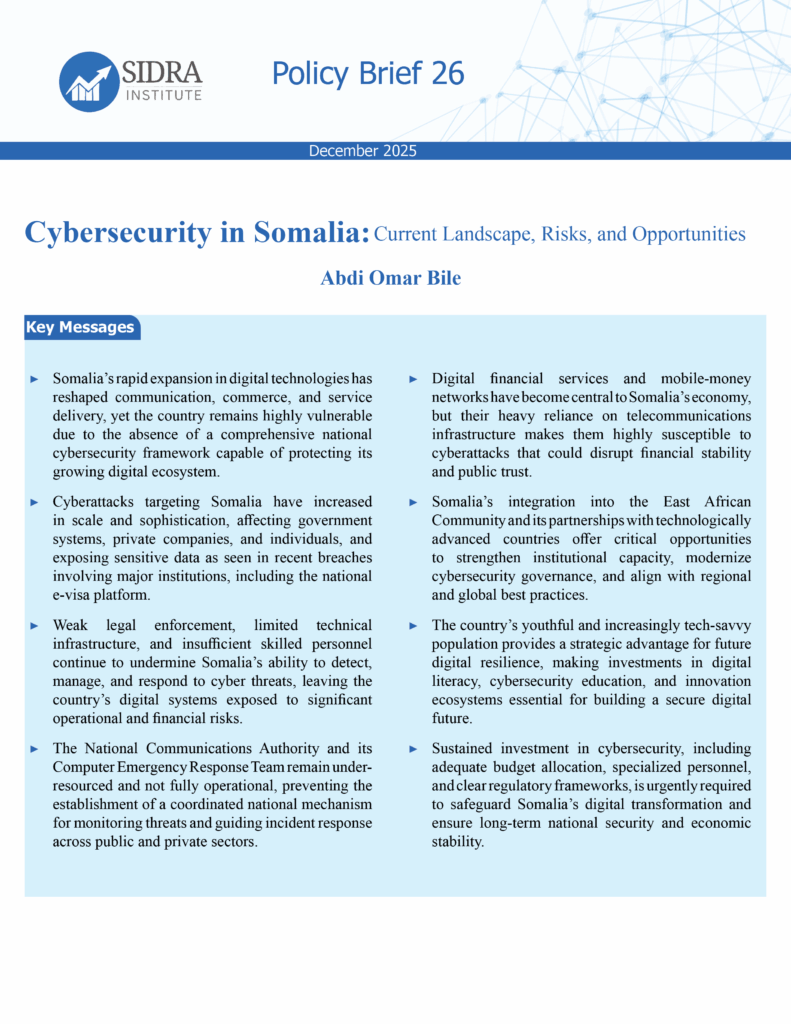
Cybersecurity in Somalia: Current Landscape, Risks, and Opportunities

Digital technologies and internet connectivity continue to reshape social and economic systems worldwide. For households, improved access to timely information and reduced transaction costs help strengthen learning outcomes, support more active labor-market participation, and raise income and overall welfare. For businesses, digital tools are becoming integral to decision-making, operational efficiency, innovation, and the ability to reach a broader market (World Bank, 2024). Africa is experiencing a rapid digital transformation. Despite ongoing challenges related to infrastructure, connectivity, and service reliability, Internet adoption continues to rise across the continent. Between 2019 and 2022, more than 160 million people became regular users of cyberspace, highlighting the growing dependence on digital platforms for communication, commerce, education, and governance (World Bank, 2024). This expansion is reshaping how communities connect and access opportunities, even as digital inclusion remains uneven across regions. Despite the rapid expansion of the digital age, this transformation has also introduced significant risks, most notably the rising threat of cybercrime. As technological innovation accelerates, cybercriminals have adapted in parallel, using increasingly sophisticated methods to exploit digital vulnerabilities. These developments pose serious risks to individuals, organizations, and national security. The impacts extend well beyond financial losses, often resulting in considerable psychological and emotional distress for victims (Interpol, 2024). In 2024, the cybersecurity landscape was shaped by rising geopolitical tensions, rapid AI adoption, and increasing vulnerabilities across global supply chains, according to the Global Cybersecurity Outlook 2025 (World Economic Forum, 2025). Organizations faced mounting pressure as regulatory environments became more fragmented and cybercrime, particularly AI enhanced ransomware, grew more sophisticated. More than 15 million cybercrime incidents were recorded globally in 2024, a slight decrease from the previous year. The highest level was in 2021, with 19.23 million incidents (Statista, 2025). In 2023, nearly 10 million devices were infected with data-stealing malware, each exposing an average of 51 login credentials. Cybercriminals used these stolen credentials to enable further attacks or traded them across dark-web forums and private Telegram channels (Kaspersky, 2024). Africa is among the regions that have faced the highest number of cyberattacks in recent years. The 2023 assessment points to a sharp rise in such incidents, underscoring the continent’s growing exposure to digital threats (Interpol, 2024). According to the report, the average number of weekly cyberattacks per organization increased by 23% from the previous year, marking the highest global growth rate. Although the report does not provide a consolidated total of incidents, it highlights that both the frequency and impact of cybercrime continue to escalate. Importantly, cyber-dependent and cyber-enabled crimes are now classified as medium to high-risk threats in more than two-thirds of surveyed countries, revealing widespread vulnerability across Africa’s digital landscape. While the global community has witnessed significant technological advancements over the past three decades, Somalia has also grappled with prolonged conflict and instability, conditions that have constrained its ability to benefit from digital progress fully. Even so, notable gains have been made, particularly in telecommunications and digital financial services (World Bank, 2024). Somalia’s cybersecurity vulnerabilities stem from weak legal enforcement, limited technical infrastructure, a shortage of skilled personnel, and the absence of coordinated national mechanisms for threat detection and response. Together, these factors create a fragile digital environment highly susceptible to cyber risks, underscoring the urgent need for sustained capacity-building and strategic planning. Somalia currently faces a significant gap in its cybersecurity architecture, as there is no clearly defined national strategy to prevent or respond to large-scale cyberattacks. Although the cabinet has approved a new cybersecurity bill, it has not yet been ratified by parliament (SONNA, 2025). The country ranks among the top 20 globally in terms of the number of computers infected with malware, underscoring the severity of the threat. The absence of a coordinated cybersecurity system also means there is no reliable mechanism for tracing the origin of attacks. Over the past decade, cyber incidents in Somalia have frequently involved the hacking of email accounts, personal computers, and web applications, exposing both individuals and institutions to persistent digital vulnerabilities (Nur, Abas Osman, 2021). This policy brief examines Somalia’s digital development, the emerging cybersecurity challenges, the current response efforts, and future opportunities, and concludes with actionable policy recommendations.

Cybersecurity in Somalia: Current Landscape, Risks, and Opportunities Read More »

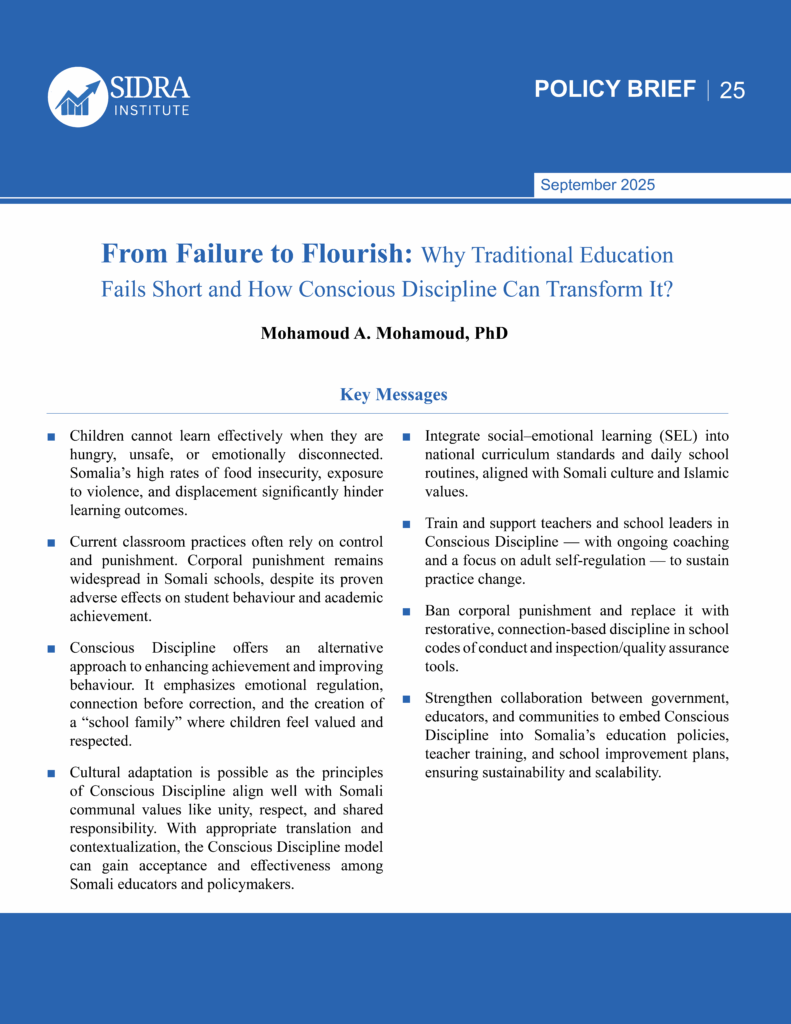
From Failure to Flourish: Why Traditional Education Fails Short and How Conscious Discipline Can Transform It?

This policy brief advocates for the introduction of Conscious Discipline, a trauma-informed, relationship-based approach to behaviour and learning to improve educational outcomes in Somalia. The current reliance on punitive discipline, coupled with high rates of poverty, food insecurity, and trauma, has left millions of children either out of school or unable to learn effectively. Data from UNICEF, the World Bank, and Somali authorities confirm that school attendance, quality of instruction, and emotional safety remain critically low. Conscious Discipline offers a locally adaptable alternative that focuses on building emotional security, connection, and self-regulation in children. The brief outlines recommendations for integrating this approach into national education policy, teacher training, and community engagement. It concludes that creating emotionally safe learning environments is not a luxury but necessary for Somalia to build an inclusive, resilient, and effective education system. Key Findings

From Failure to Flourish: Why Traditional Education Fails Short and How Conscious Discipline Can Transform It? Read More »

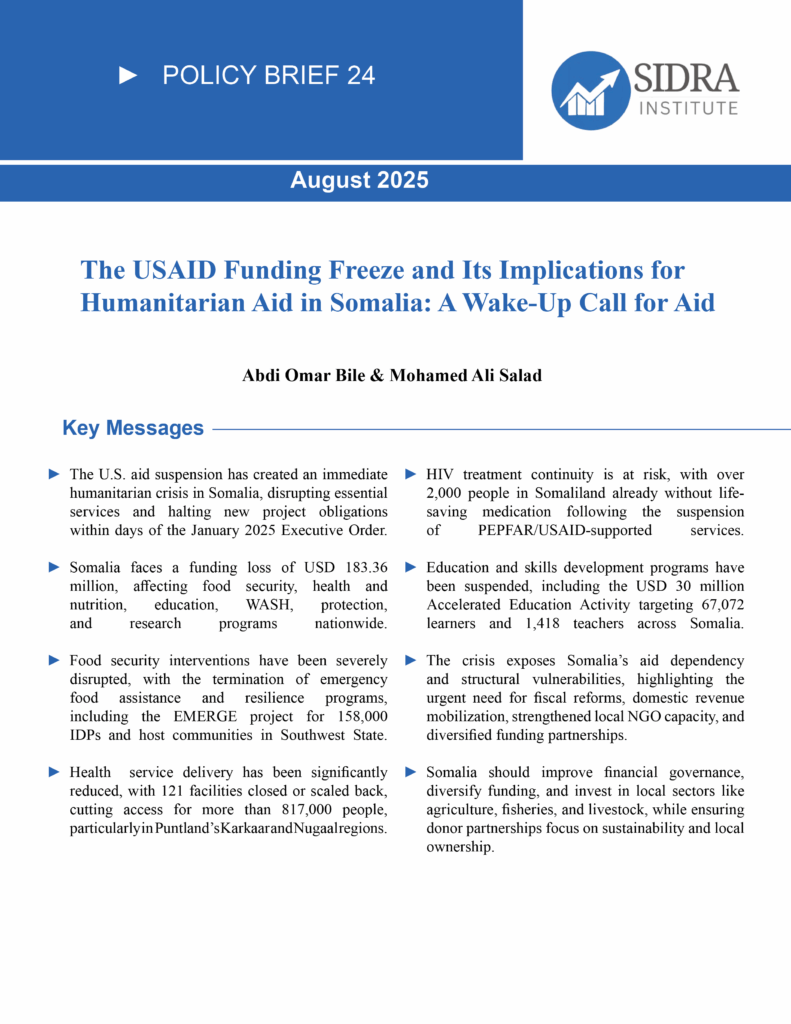
The USAID Funding Freeze and Its Implications for Humanitarian Aid in Somalia: A Wake-Up Call for Aid Dependency

On January 20, 2025, US President Donald Trump issued an Executive Order (EO) mandating a 90-day suspension of U.S.-funded foreign aid, including humanitarian operations, with the stated aim of evaluating the alignment of US foreign development assistance with the administration’s foreign policy priorities (White House, 2025). On January 24, 2025, the United States Agency for International Development (USAID), the agency responsible for distributing civilian foreign aid on behalf of the US government, announced to all its global partners a pause on all new funding obligations and sub-obligations under Development Objective Agreements (DOAGs) (USAID, 2025) The United States is the world’s largest donor of international aid. Established in 1961, USAID serves as the US government’s primary agency for funding international development and humanitarian assistance and is globally recognized for its leadership in delivering growth and humanitarian aid (FY 2024 International Affairs Budget, n.d.). Several government agencies are involved in US foreign assistance, with USAID accounting for approximately 60% of the total, followed by the Department of State, which manages nearly 30% (Brookings, 2024). In fiscal year 2024, the United States allocated $54 billion in global assistance, supporting various international programs. Of this amount, $13 billion was explicitly directed to sub-Saharan Africa, addressing critical needs such as humanitarian aid, economic development, and infrastructure projects. Additionally, a significant portion of the remaining funds was invested in global programs, including health initiatives to combat diseases and improve medical access and climate-related efforts crucial for achieving environmental protection and sustainability. Africa has become a primary beneficiary of these broader programs, receiving substantial support to enhance resilience and development (Foreign Assistance, 2024). The suspension of US Government funding, particularly through USAID, caused widespread disruption in ongoing and planned humanitarian programs, such as health and nutrition programs, which are critical for the health, welfare, and livelihoods of vulnerable communities worldwide. The disruption has affected millions of people, particularly in vulnerable and crisis-affected regions in the world, by cutting off essential services such as HIV treatment, tuberculosis care, and food aid (New York Times, 2025). Africa has been significantly impacted by the suspension of USAID funding, where many countries depend heavily on USAID for essential programs, with healthcare being the most significant component of US aid to Africa (ISSAfrica, 2025). Somalia, a Horn of Africa nation facing challenges such as conflict, drought, and economic instability, relies heavily on aid. USAID funding has been a crucial lifeline, supporting essential areas such as food security, healthcare, education, and governance. The United States has provided nearly $2.3 billion for humanitarian assistance in Somalia since Fiscal Year 2022, supporting programs ranging from emergency nutrition and sanitation projects to education, skills, and livelihood programs (Reliefweb, 2024). In 2025, Somalia was set to receive $125 million in USAID funding for similar programs (AP, 2025). A recent survey by the Somali NGO Consortium on the impact of the US aid suspension in Somalia revealed significant disruptions to humanitarian efforts. Hundreds of NGO staff have been affected, and millions have been left without essential services. According to the survey, over 60% of NGOs operating in Somalia counted on USAID as their leading donor to address humanitarian needs. Approximately 70% of national and international NGOs in Somalia receive funding from the Bureau for Humanitarian Assistance (BHA) and USAID, with more than half receiving stop-work orders, including those with indirect funding. The most affected sectors are health, nutrition, WASH, food security, education, and protection. Over 10,000 beneficiaries have been directly impacted, with one organization reporting disruptions affecting over 1.6 million people. Staff layoffs and unpaid leave have become common, leaving many NGOs in a state of uncertainty (Somali NGO Consortium, 2025). SIDRA Institute has produced this policy brief against the backdrop of the omnipresent concern about the US funding freeze to highlight its effects on the delivery of essential services for vulnerable communities, the impact on NGO staff and employment, disruptions to economic development, and the broader implications of the sudden withdrawal of assistance in the context of aid dependency.

The USAID Funding Freeze and Its Implications for Humanitarian Aid in Somalia: A Wake-Up Call for Aid Dependency Read More »

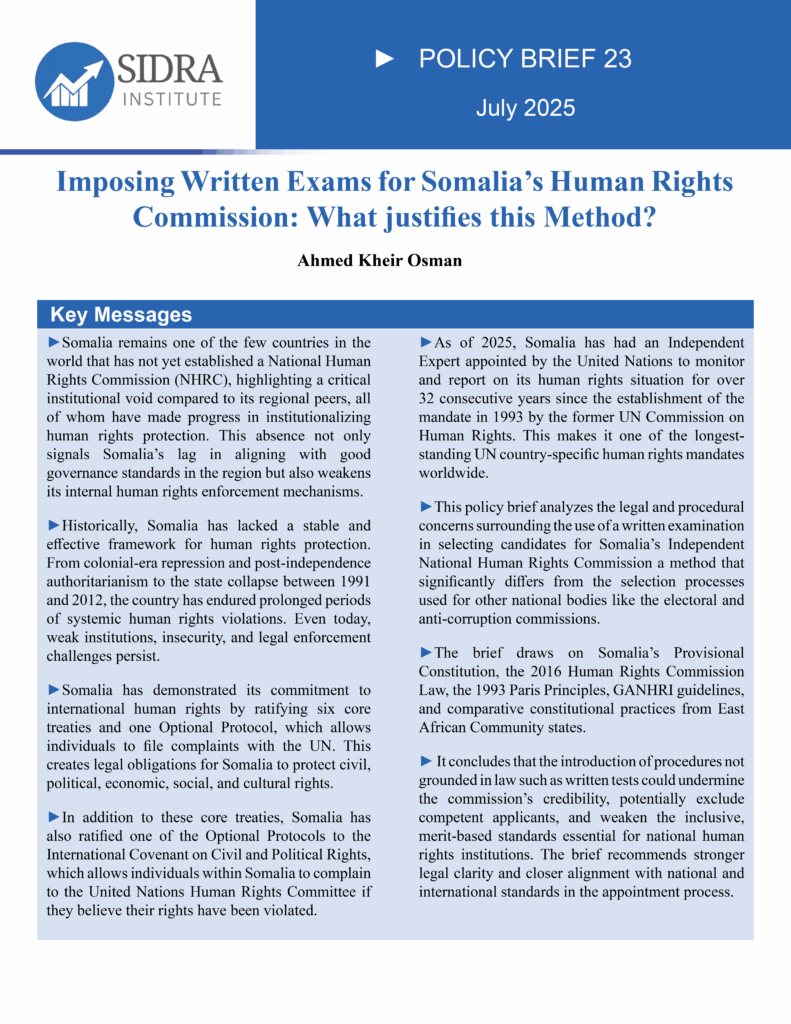
Imposing Written Exams for Somalia’s Human Rights Commission: What justifies this Method?

Somalia remains one of the few countries in the world that has not yet established a National Human Rights Commission (NHRC), highlighting a critical institutional void compared to its regional peers, all of whom have made progress in institutionalizing human rights protection. Historically, Somalia has lacked a stable and effective framework for human rights protection. From colonial-era repression and post-independence authoritarianism to the state collapse between 1991 and 2012, the country has endured prolonged periods of systemic human rights violations. Even today, weak institutions, insecurity, and legal enforcement challenges persist. Conversely, Somalia has shown commitment to international human rights by ratifying six (6) core human rights treaties and one Optional Protocol, allowing individuals to submit complaints to the UN Human Rights Committee. In addition to these core treaties, Somalia has also ratified one of the Optional Protocols to the International Covenant on Civil and Political Rights, which allows individuals within Somalia to complain to the United Nations Human Rights Committee if they believe their rights have been violated. As of 2025, Somalia has had an Independent Expert appointed by the United Nations to monitor and report on its human rights situation for over 32 consecutive years since the establishment of the mandate in 1993 by the former UN Commission on Human Rights. This makes it one of the longest-standing UN country-specific human rights mandates worldwide. This policy brief analyzes the legal and procedural concerns surrounding the use of a written examination in selecting candidates for Somalia’s Independent National Human Rights Commission a method that significantly differs from the selection processes used for other national bodies like the electoral and anti-corruption commissions. The brief draws on Somalia’s Provisional Constitution, the 2016 Human Rights Commission Law, the 1993 Paris Principles, GANHRI guidelines, and comparative constitutional practices from East African Community states.  It concludes that the introduction of procedures not grounded in law such as written tests could undermine the commission’s credibility, potentially exclude competent applicants, and weaken the inclusive, merit-based standards essential for national human rights institutions. The brief recommends stronger legal clarity and closer alignment with national and international standards in the appointment process.

Imposing Written Exams for Somalia’s Human Rights Commission: What justifies this Method? Read More »

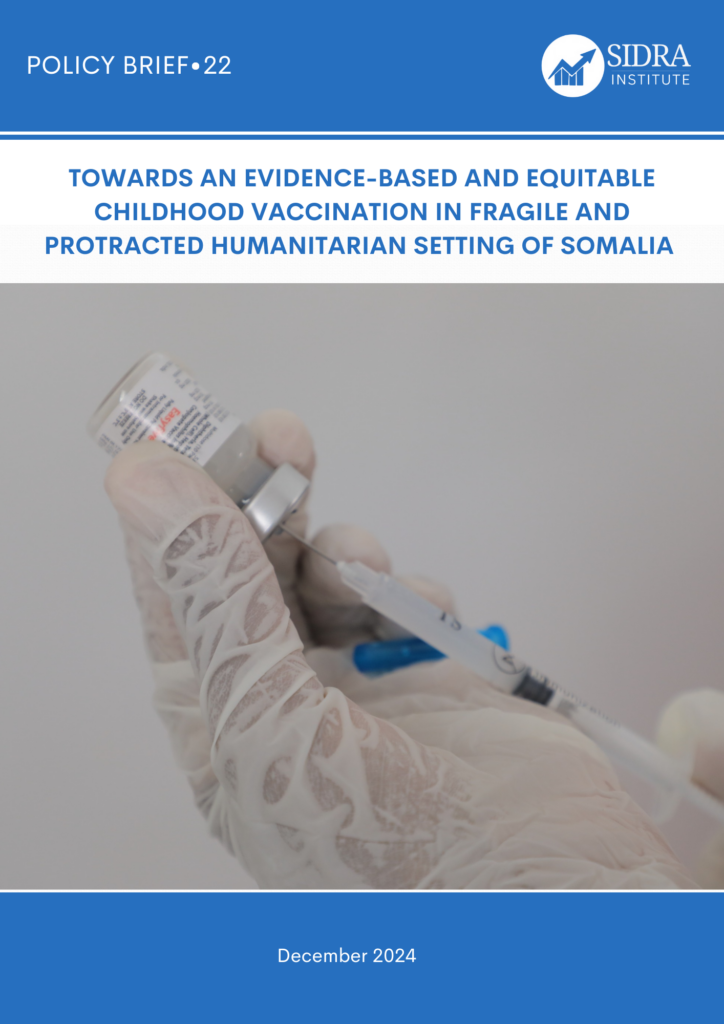
Towards an evidence-based and equitable childhood vaccination in fragile and protracted humanitarian setting of Somalia

Somalia is classified as the most extremely fragile country in the world (OECD, 2022).  According to OECD (2016), “fragility is the combination of exposure to risk and insufficient coping capacities of the state, system and/or communities to manage, absorb and mitigate those risks.” (OECD, 2016). A multitude of crisis, shocks and uncertainties such as persistent conflicts and violence, political deadlock, recurrent droughts and floods, and fragmented and weak state institutions have turned the country into one of the most challenging operating environments in the world and left it in dysfunctional state of fragility.   State coping capacities reflect the governance and strength of its institutions. Decades of conflict has left the state institutions with a fragmented and weak governance and decision-making structures and shortage of critical resources. The health system has particularly bore the brunt of the state collapse and suffered from fractured governance, low service availability, poor health infrastructure, severe shortage of health workers and limited reliable and quality health data. Today’s Federal Somalia accommodates two levels of health authorities; Ministry of Health at the Federal level (FMoH) and Ministries of Health at each of the Federal Member States (FMS MoH). These MoHs are responsible for leading and coordinating the health sector programmes and activities at national, state, regional and district levels. Multiple external and internal actors such as the UN agencies (WHO, UNICEF, UNFPA, World Bank) and international and local Non-governmental Organization (NGOs) are also involved in the health service planning financing and service delivery in different locations.  Poor governance, coordination, insufficient funding and limited capacity for service delivery have been idenfied as the main drivers of the ineffective planning and responsiveness, overlapping of interventions and poor performance of the health system (MoH Somalia, 2021). Somalia is one of 20 countries in the world with the highest numbers of zero-dose children (UNICEF, 2023). More than 60 percent of children under two years of age have not received any dose of the four basic routine childhood vaccines. Most of these children are in the poorest and most vulnerable segments of the population with low level of formal education and access to routine primary health care services living in remote locations and in nomadic and internally displaced communities. This brief draws evidence from two studies on zero-dose and under-immunized communities in Somalia. The first study assessed the prevalence and determinants of unvaccinated (zero-dose) children in Somalia using the demographic and health data (DHS) (Mohamoud et al, 2023). The second study explored who and where the zero-dose and under-immunized children live, and how orthe strategies used to reach zero-dose children, using the GAVI Vaccine Alliance IRMMA framework (GAVI, n.d). The overarching objective of this policy brief is to shed light on vulnerable and at-risk zero-dose and under-immunized children in the fragile context of Somalia and provide short-term as well as long-term actionable recommendations and policy options for improved and equitable childhood vaccination coverage (Bile et al, 2023). The two studies presented in this brief are part of a larger research project (RAISE) on zero-vaccine dose communities in crisis-affected populations (LSHTM, n.d).

Towards an evidence-based and equitable childhood vaccination in fragile and protracted humanitarian setting of Somalia Read More »

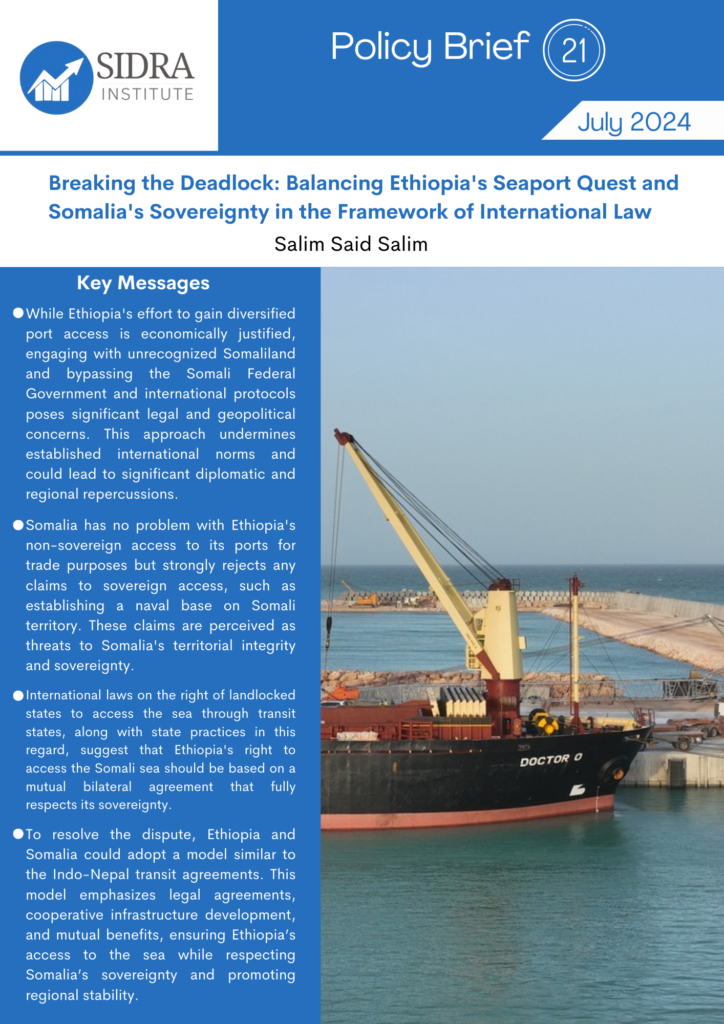
Breaking the Deadlock: Balancing Ethiopia’s Seaport Quest and Somalia’s Sovereignty in the Framework of International Law.

Ethiopia, being landlocked, considers reliable and cost-effective seaport access crucial for its economic development. Studies reveal that landlocked countries tend to be 20% less developed than they would be if they had access to the sea, partly due to higher transportation costs ranging from 50 to 260% more than coastal countries. To achieve its development objectives, Ethiopia requires “export-oriented” industrialization and increased agricultural productivity (The Ethiopian Herald, 2024). Historically, Ethiopia has relied on neighboring countries for sea access, especially since Eritrea’s secession in 1993, which cut off its primary maritime outlet. Ethiopia has since secured bilateral agreements, notably with Djibouti through the Djibouti Port Utilization Agreement. This agreement grants Ethiopia permanent rights to access the sea, use port facilities, and transit goods through Djibouti’s territory. Key provisions include exemptions from customs duties and the right for Ethiopian enterprises to operate in Djibouti’s duty-free zone. Disputes under this agreement can be settled through arbitration (Shchukina, 2024). This agreement exemplifies a successful bilateral approach that respects international norms and mutual sovereignty. In addition to the Djibouti port, Ethiopian access options include Kenya’s Moyale dry port and Somal’s Berbera port, though these routes currently lack the necessary infrastructure to support bulk shipments. Ethiopia’s need for cost-effective port access has led to aggressive diversification initiatives, resulting in an increasing number of sea and dry ports utilized by the country (The Ethiopian Herald, 2024). These efforts highlight Ethiopia’s strategic goal to mitigate dependency on a single-entry point and enhance logistical resilience. As part of Ethiopia’s efforts to expand its access to ports, it signed a port pact with Somalia in June 2018 and announced plans to jointly develop four Somali ports as part of a wider bilateral agreement to enhance political and economic cooperation. This agreement reflected Ethiopia’s regional push to warm relations with its neighbors, diversify port access, and secure its economic future (Oxford Analytica, 2018). However, Ethiopia’s recent agreement with Somaliland represents a significant shift from its previous diplomatic and strategic approaches. On January 1, 2024, Ethiopia signed a Memorandum of Understanding (MoU) with the self-proclaimed Republic of Somaliland.  The full text of the agreement remains undisclosed to public, Somaliland announced an agreement to lease land to Ethiopia for 50 years for the construction of a naval facility along its coast, in exchange for Ethiopia’s recognition of Somaliland’s statehood. Yet, ambiguity persists regarding the agreement’s specifics, including the extent of the leased area and supplementary provisions. Initially, Ethiopian authorities hinted at a multifaceted purpose for the proposed facility, encompassing both military and commercial functions. Conversely, Somaliland asserted that Ethiopia’s intent revolves solely around establishing a naval base, with Berbera port retained for trade operations. Regarding the area, the initial announcement indicated a 20-kilometre stretch of coastline for lease. But later, a prominent Ethiopian figure stated the deal’s coverage spans 20 square kilometres of both land and sea (Šturdík, S. (2024). While Ethiopia’s pursuit of diversified port access is driven by legitimate economic and strategic interests, the method of bypassing recognized international protocols and engaging with an unrecognized entity like Somaliland raises critical legal and geopolitical issues. The move could lead to significant diplomatic and regional repercussions, challenging the established norms of international law and state sovereignty. Consequently, this move has been widely criticized by the international community, with countries and organizations like China, the United States, the African Union, and the European Union expressing support for Somalia’s territorial integrity. Somalia, which considers Somaliland part of its territory, condemned the agreement as an act of aggression and referred the dispute to the UN Security Council (Shchukina, 2024). With Turkey mediating talks between Somalia and Ethiopia regarding the Memorandum of Understanding (MoU), both parties have expressed a willingness to engage in continued dialogue, despite not yet reaching an agreement. This policy brief paper aims to explore the motivations, legal implications, and geopolitical ramifications of Ethiopia’s efforts to secure diversified seaport access through Somaliland. It provides a comprehensive analysis of the Ethiopian-Somaliland Agreement, examining its impact on regional stability, international law, and Somalia’s sovereignty concerns. Additionally, the paper proposes viable conflict resolution models to facilitate a mutually beneficial solution for Somalia and Ethiopia.

Breaking the Deadlock: Balancing Ethiopia’s Seaport Quest and Somalia’s Sovereignty in the Framework of International Law. Read More »

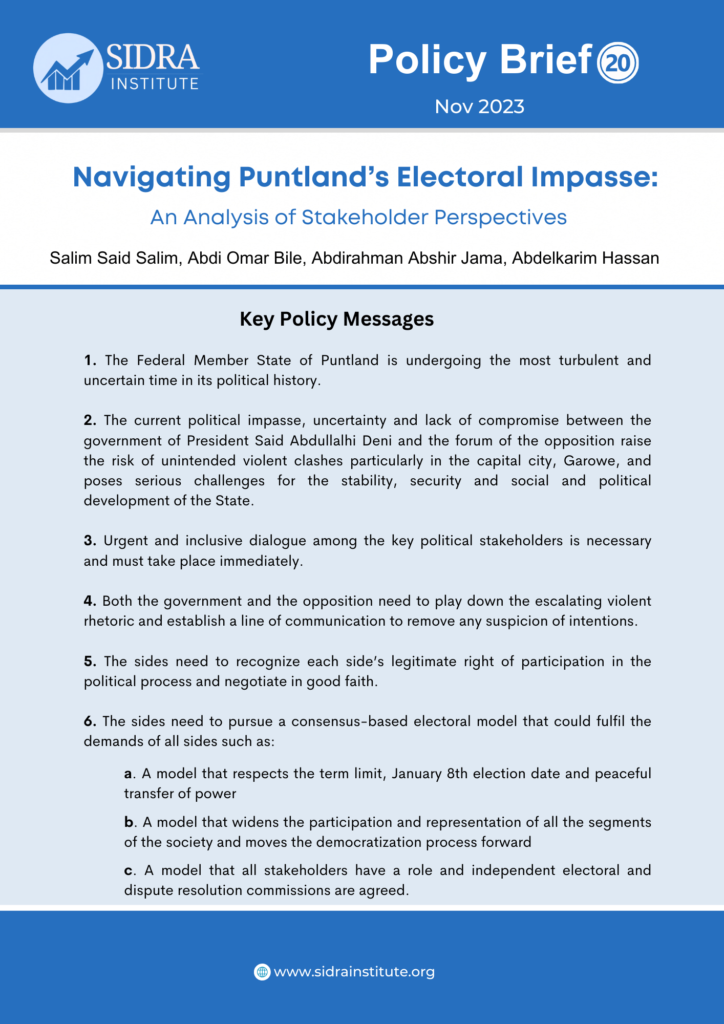
Navigating Puntland’s Electoral Impasse:  An Analysis of Stakeholder Perspectives

The archetypical stable autonomous Federal Member State of Puntland is undergoing the most turbulent and uncertain time in its political history.  Since its foundation in 1998, the State has grappled with near political crisis at the end of every presidential tenure. The political wrangling over the term limits and electoral models between the incumbent president maneuvering to remain in power and the opposition candidates vying for the highest office of the State brings the State closer to crisis.  Although the State has never transitioned to democratic system of elections, it succeeded in peaceful selection of members of the House of the People, holding presidential elections and transfer of power every five years on 8th of January in the last 15 years.  This year election year 2023 has been different in many ways. The State has successfully conducted one person one vote local elections in 33 districts for the first time since it was founded.  But the year has also seen the worst intra-state election-related conflict, political disagreement and polarization. The current electoral conflict stems from unresolved issues that originated from the district council elections held on May 25, 2023, in 30 districts. Notably, three districts in Nugal, including the capital Garowe, experienced opposition boycotts leading to the non-participation of approximately 80,000 voters. This conflicts, compounded by amendments to constitutional articles, escalated into violent clashes in Garowe in June 2023. The resulting tensions have now permeated the ongoing parliamentary and presidential elections, given that the current president’s term is scheduled to conclude on January 8, 2024. The incumbent president and opposition groups find themselves in a deadlock, unable to reach a consensus on the electoral processes. The political landscape is marked by a clash of interests as both sides navigate the complexities of this electoral challenge. President Said Abdullahi Deni is attempting to achieve what no previous Puntland leader has accomplished: securing a second term in office. However, he encounters formidable opposition from a diverse group of politicians who despite their differences, share a common objective – preventing his re-election. Opposition forum believe that the president’s potential re-election hinges on a “one-sided election,” marked by manipulation, and a lack of fairness and transparency, that will result in a predetermined outcome that fails to genuinely represent the will of Puntland’s voters. The opposition forum cited the recently established Puntland Election Commission (PEC) as an example on how the president intends to undermine his term limit in office and manipulate the outcome of the election. The president and his allies argue that the government has a mandate to complete the transition to democracy and that the State is ready for one person one vote elections. The cite the recent local elections as a proof of the concept and  vow that there will be no return to the old, discredited, traditional elder’s selection of 66 member House of the People  and their subsequent election of the president. On November 2, 2023, 28 Puntland traditional leaders gathered in Garowe and issued a statement insisting that the scheduled January 8, 2024, election should not be postponed (Puntland Mirror, 2023). They proposed a return to the traditional selection model of the 66 parliamentary members due to time limitations. Additionally, they urged the parliament to promptly release the election annex and appoint a committee for dispute resolution. This declaration coincided with the Council of Ministers’ prior approval of the new Puntland election schedule, as announced by the Puntland Election Commission on November 24, 2023. Despite the president’s rejection of the elders’ decision, asserting that the matter of elections falls within the purview of the Puntland Election Commission and not the elders’ mandate, the opposition welcomed the traditional leaders’ stance. They perceived it as the only viable solution to the current impasse, highlighting the depth of the political deadlock and the urgency for alternative approaches to move forward. Tensions between the opposition and the president escalated when the opposition released a parallel electoral timetable on November 14, 2023, to implement the traditional elders’ decision for the upcoming elections in Puntland (Garowe Online, 2023). This timetable differs from the one issued by the Puntland Electoral Commission (PEC). According to the opposition’s timetable, Puntland will hold presidential elections on January 8. However, PEC’s timetable shows the elections taking place on February 25, 2024. In an effort to ease rising tensions, President Said Abdullahi Deni, on November 17, 2023, addressed a gathering during his visit to Ano-Yaskax village in the Nugal region (Garowe Online, 2023). He expressed a willingness to enter into discussions with opposition politicians to address the ongoing election dispute. However, he made it clear that there is a condition for these talks: the electoral process must strictly adhere to the principle of “one person, one vote,” a stance endorsed by his government. While the opposition has welcomed the president’s call for dialogue, they have stipulated a prerequisite of involving an impartial third party. They emphasized that the electoral process should be collectively agreed upon by all parties involved and must proceed as scheduled on January 8, 2024. Alarmed by the continued mobilization of forces by the government and some opposition groups, International Partners and Puntland Non-State Actors (PUNSAA) have been calling for de-escalation of tension and engaging in negotiations to reach a consensus-based electoral model. On November 21, 2023, International partners called on all parties to remain calm and exercise restraint, resolving their disputes through peaceful means, after expressing concerns about the risk of higher tensions, including the ongoing mobilization of forces (UNSOM, 2023). PUNSAA issued a statement urging all parties to negotiate and reach a consensus-based electoral model. In this context, this report provides a thorough analysis of the positions and perspectives of key political stakeholders, including the ruling party and its coalition parties, opposition forum, traditional elders, and civil society organizations. Amidst a heated election context, divergent views and approaches are explored, emphasizing the need for inclusive dialogue to address the impasse and ensure a peaceful and credible electoral process.

Navigating Puntland’s Electoral Impasse:  An Analysis of Stakeholder Perspectives Read More »

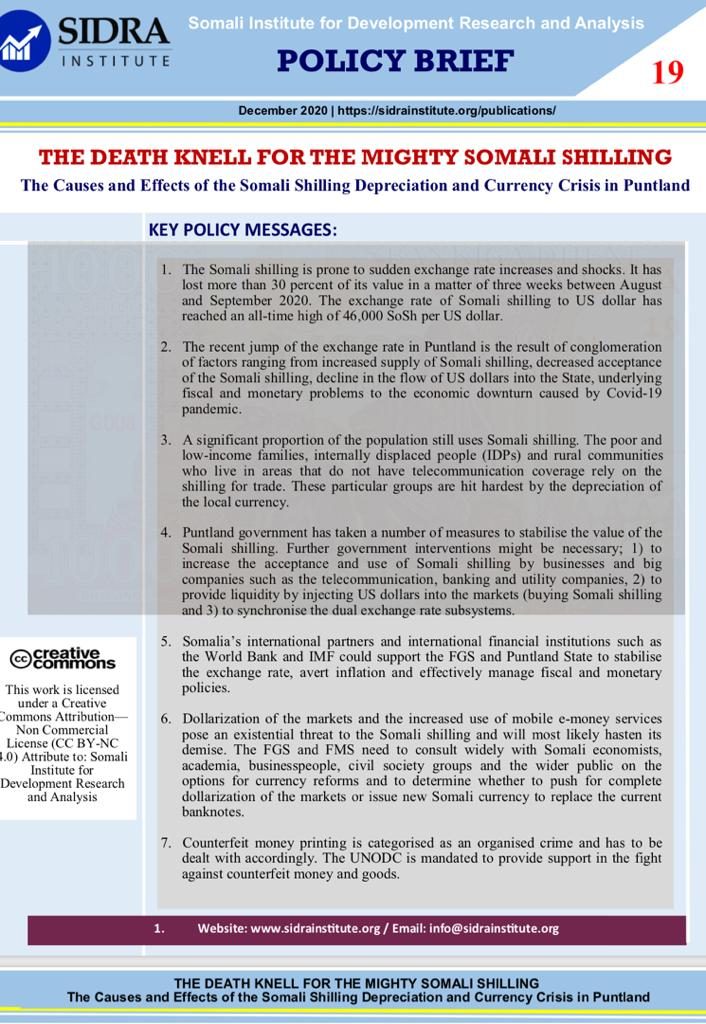
THE DEATH KNELL FOR THE MIGHTY SOMALI SHILLING: The Causes and Effects of the Somali Shilling Depreciation and Currency Crisis in Puntland

The use of the Somali sovereign currency (the Somali shilling) has endured in spite of decades of conflict, state failure and fragility and the absence of a central bank in Somalia. The currency has experienced continuing depreciation and declining use due to a conglomeration of factors; the dollarization of the markets, the increasing use of mobile e-money and an influx of counterfeit money. The surprise recent rise in the exchange rate of Somali shilling to US dollar in Puntland, where it reached an all-time high of 46,000 SoSh per US dollar in November 2020, has caused concern among policy makers, businesspeople and the wider Somali public. SIDRA has conducted a research study in October – November 2020 to examine the available evidences on the causes of the current sharp decline of the value of the Somali shilling in Puntland, sings of inflation and the effects of this depreciation on the poor and low-income families, the State and the wider public. The study explored the underlying fiscal and monetary problems of the Somali shilling depreciation and briefly summarizes the difficulties faced by the monetary institutions such as the Central Bank of Somalia and Puntland State Bank to stabilise the local currency. The turbulent relationship and disagreements between the FGS and FMS over a raft of issues have eclipsed many important debates on peace and state building such as currency reforms. This study brings the debate over a new Somali currency to the fore and poses the question whether “the Somali shilling can withstand the multidimensional onslaught on its acceptability and value this time round?”

THE DEATH KNELL FOR THE MIGHTY SOMALI SHILLING: The Causes and Effects of the Somali Shilling Depreciation and Currency Crisis in Puntland Read More »

The Benefits and Burden of Chinese Foreign Direct Investment in East Africa

China’s trade and economic relationship with East Africa countries brought in much needed aid and Foreign Direct Investment (FDI) in infrastructure projects which would otherwise be too costly for these developing countries, and contributed to construction and development boom. It has made possible for some countries in the sub-region to grow their internal consumer market, generate some new opportunities for jobs and economic growth. Somalia could benefit from China’s FDI in infrastructure projects such as the rehabilitation and expansion of airports, ports and roads but should negotiate formal, transparent, mutually beneficial trade and economic cooperation agreement with China.

The Benefits and Burden of Chinese Foreign Direct Investment in East Africa Read More »

Scroll to Top