
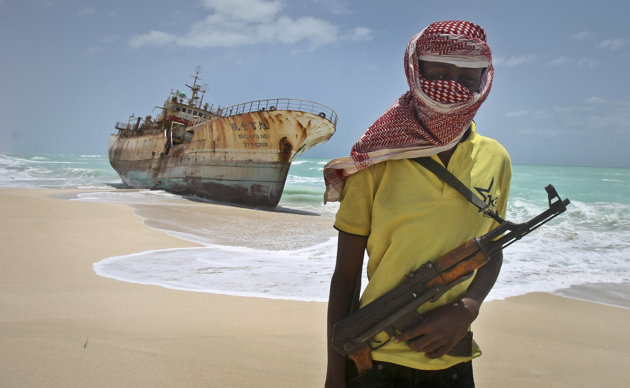
Somalia’s Coast Is Slipping Back Into Piracy
Somalia’s piracy attacks surged between 2005 and 2011, during which pirates earned millions in ransom payments. At the peak of piracy, it is estimated that more than $400 million was paid in ransoms for pirate activities. During this period, pirates primarily targeted foreign vessels, seizing cargo and crews and holding them hostage to negotiate ransom payments. However, recent attacks have expanded to target a wider range of vessels, including those carrying shipments belonging to Somali businesspeople. The international community mobilized to combat the surge in piracy off the Horn of Africa. More than 40 countries participated in military counter-piracy operations, either independently or through three major coalitions: the European Union Naval Force Somalia through Operation Atalanta, NATO’s Standing Naval Group through Operation Ocean Shield, and Combined Task Force 151. These coordinated efforts significantly reduced piracy attacks, particularly between 2012 and 2016. As a result, NATO formally ended Operation Ocean Shield off the coast of Somalia in December 2016. The European Union Operation Atalanta still exists, but its role has shifted toward monitoring and support instead of continuous combat operations. International efforts were not the only factor in reducing piracy. Locally led initiatives, particularly by the Puntland Maritime Police Force, a UAE supported force, also played a critical role. These efforts focused on disrupting pirate networks on land and preventing attacks before they could be launched. The reasons behind the slow resurgence of piracy The recent, gradual resurgence of piracy in Somalia is believed to be driven by a combination of factors. One key factor is the decline in international attention, as several counter-piracy operations have ended or scaled down. At the same time, local forces such as the Puntland Maritime Police Force have shifted focus. For example, in the past year, its resources were redirected toward operations against ISIS militants in the Al Miskaat mountain range. Beyond changes in security efforts, the resurgence is also driven by persistent root causes. Economic hardship in Puntland, where the latest hijackings have occurred, particularly in coastal communities dependent on fishing, has pushed some individuals toward piracy as a survival strategy. These challenges have been exacerbated by droughts, declining fish stocks, and broader economic shocks. Illegal, unreported and unregulated fishing by foreign vessels further depletes local fish stocks, undermining the livelihoods of fishermen and increasing incentives for piracy. Somalia is estimated to lose around 300 million US dollars annually to such fishing across its vast maritime territory, which includes Africa’s longest coastline, approximately 3,333 km along the Indian Ocean and the Gulf of Aden. These ongoing violations are sometimes used to justify pirate attacks. A 2024 study by the SIDRA Institute found that in some communities, piracy has gained a degree of social acceptance. It is occasionally viewed as a form of coast guarding against foreign exploitation. Additionally, the influx of ransom money can create local economic dependence, further reinforcing and sustaining piracy activities. The study also highlights that even when piracy incidents decline, the underlying infrastructure, including networks, financing mechanisms, and operational skills, remains intact. This allows piracy to quickly re-emerge when conditions become favorable. It is also important to note that there are differences between the pirates of 2005 to 2012 and those operating today. Earlier pirate groups relied mainly on basic tools such as mobile phones. In contrast, modern pirates have access to more advanced technologies, including online ship tracking platforms that provide real-time information on vessel locations, routes, and cargo. This enables them to plan and execute more sophisticated and targeted attacks. Abdi Omar Bile is a researcher at the Somali Institute for Development Research and Analysis (SIDRA) in Puntland, Somalia, with more than 15 years of experience in journalism and media practice. His research interests include media, technology, governance, security, environmental reporting, and public policy. Over the course of his career, he has worked with both local and international media organisations, reporting extensively on political developments, climate change, security issues, and social challenges affecting communities in Somalia. He holds a Master’s degree in Journalism and Mass Communication.
Somalia’s Coast Is Slipping Back Into Piracy Read More »